
Vidaya
Healthspan score from your wearables, labs, and DNA.
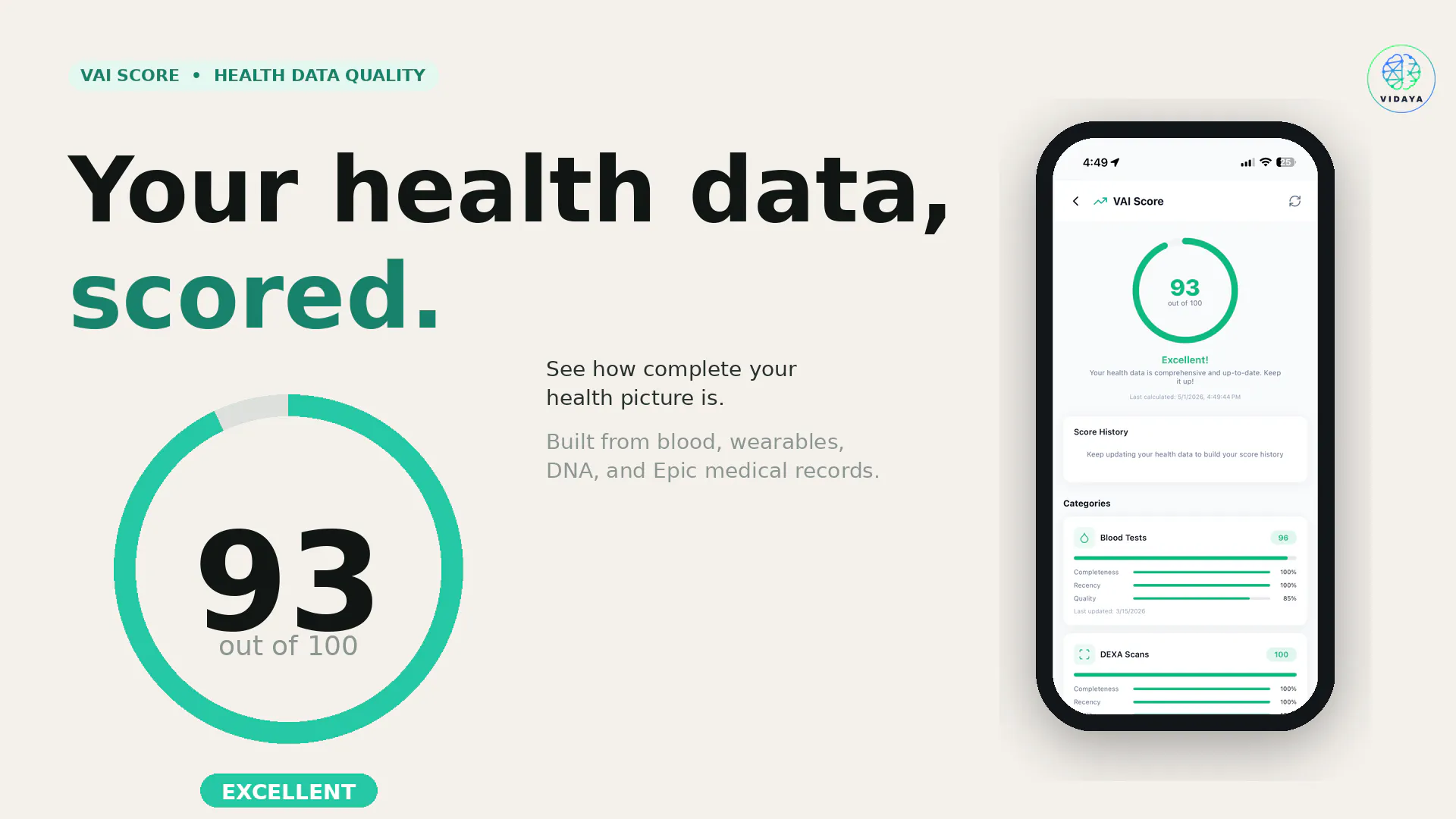
Vidaya turns your wearable data, labs, and habits into a real Healthspan score and a personalized longevity plan. Built by founders tired of dashboards that show numbers but never tell you what to actually do next.
AI Analysis
Vidaya integrates wearable device data, lab results, DNA insights, and habits into an AI-generated Healthspan score and personalized longevity plan. Its unique selling point is providing clear, actionable recommendations on 'what to do next' instead of overwhelming users with raw metrics and dashboards. It solves key pain points like health data fragmentation, lack of practical guidance, and difficulty in translating biomarkers into real lifestyle changes for extending healthy lifespan. The overall value proposition is empowering users with an integrated, AI-driven tool for proactive longevity management and better health outcomes.
In 2025-2026, market timing is favorable due to maturing wearable and AI technologies, surging consumer demand for personalized preventive health and longevity (influenced by biohacking trends), and widespread adoption of at-home testing/DNA kits. Post-pandemic health awareness and supportive wellness economy further boost it. Excellent Timing.
Technical feasibility is moderate with existing APIs for wearables/labs and AI models for personalization, but integrating diverse data sources accurately is challenging. High compliance risks from handling sensitive DNA/health data (HIPAA/GDPR). Development and operational costs are medium-high for AI maintenance and user acquisition. Scalability is promising but regulatory and data privacy hurdles lower overall feasibility. Rating: Medium.
Main segments: Tech-savvy, health-conscious adults aged 30-55, biohackers, fitness enthusiasts and productivity-focused professionals, primarily in the US, Europe, and urban Asia. Estimated market: Digital health TAM exceeds $500B with longevity/personalized wellness SAM around $20-30B; SOM for integrated AI scoring apps in millions. Core pain points include confusing data without actions and desire for evidence-based longevity optimization. High willingness to pay for premium personalized plans via subscriptions.
Medium. Direct competitors: 1. InsideTracker (insidetracker.com), 2. Levels Health (levelshealth.com), 3. Function Health (functionhealth.com), 4. Oura (ouraring.com), 5. Viome (viome.com). Advantages: Broader integration of wearables/labs/DNA/habits into one Healthspan score with specific longevity plans and actionable focus. Disadvantages: Newer entrant with potentially less clinical validation, reliance on user-provided multi-source data, and higher complexity compared to specialized single-focus tools. Strong differentiation in holistic 'what to do' guidance.
Upgrade Pro to unlock full AI analysis
Similar Products

Cohere Parse 5
Turn complex docs, tables & images into AI-ready data
▲ 158 votes

Adapt
The company brain that gets work done
▲ 124 votes

Cercle
The bat signal for your closest friends.
▲ 121 votes

Orus
Claude for investing in perpetuals
▲ 121 votes

Kosshi
Simple, fast outliner for Mac and iPhone.
▲ 90 votes

Refoid
Automate App Store refund responses and track every outcome
▲ 68 votes