
Vivaldi 8.0
A bold new look for the browser that's all yours
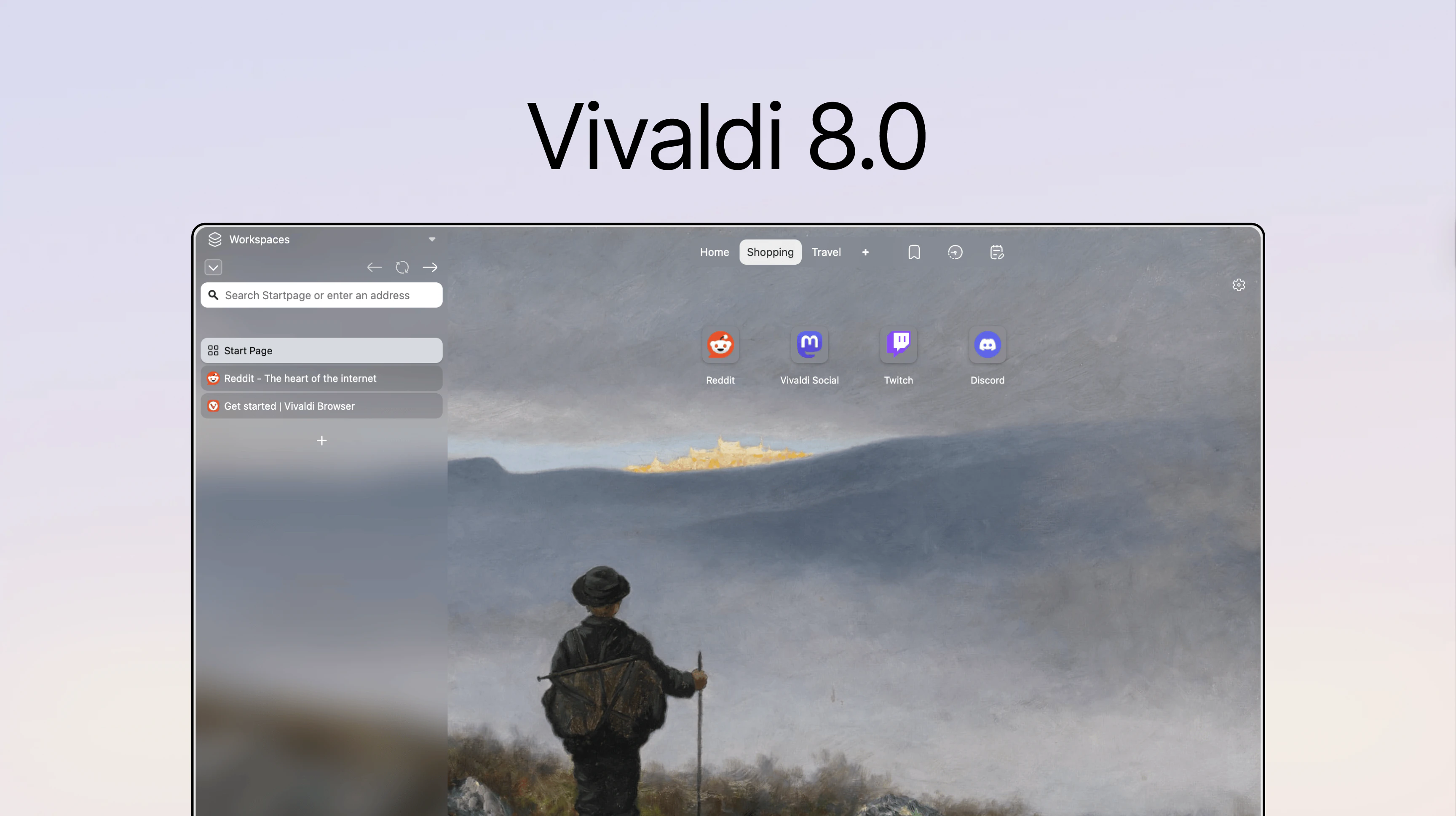
Thirteen years in, and we've just shipped our most ambitious update yet. Vivaldi 8.0 has a bold new look we call Unified. Every toolbar now sits on one continuous surface, giving you new ways to customize your browser across the whole window, edge to edge. With six layouts to start from - then make it all yours. Every color, every toolbar, every pixel. Your browser. Your rules.
AI Analysis
Vivaldi 8.0 introduces the 'Unified' interface, merging all toolbars into one continuous customizable surface with six starter layouts. Users can personalize every color, toolbar, and pixel. Building on its privacy-first foundation, it includes built-in email, calendar, notes, RSS feeds, tab stacking, web panels, and advanced productivity tools without relying on extensions. It solves pain points of inflexible mainstream browsers, fragmented workflows, privacy erosion, and lack of control. The value proposition is empowering users with 'Your browser. Your rules' for a fully personalized, private, and productive browsing experience.
In 2025-2026, timing is favorable due to rising privacy regulations, user fatigue with data-heavy browsers like Chrome, and demand for personalized interfaces amid maturing web technologies. Economic focus on productivity tools and alternatives to Big Tech supports adoption. However, AI-integrated browsers are the dominant trend, making pure UI customization updates slightly less disruptive. Overall: Moderate Timing.
High feasibility. Vivaldi is built on mature Chromium technology with an experienced team, minimizing technical difficulty. Development costs are manageable as an iterative update; no supply chain issues for software. Strong privacy compliance aligns with their brand. Excellent scalability via desktop/mobile sync. Main risk is maintaining performance with heavy customization. Overall rating: High.
Primary users: Tech-savvy power users, privacy advocates, developers, and productivity professionals aged 25-45, concentrated in Europe, North America, and Asia. TAM for alternative browsers exceeds 500M users; SAM for privacy/customizable browsers ~50-100M; SOM for Vivaldi in tens of millions. Core pains: rigid UIs, tracking, tool fragmentation. Willingness to pay is moderate (browser is free; revenue via partnerships/donations; users value it enough to switch and engage deeply).
Medium. Direct competitors: 1. Brave (brave.com), 2. Mozilla Firefox (mozilla.org), 3. Opera (opera.com), 4. Arc Browser (arc.net). Vivaldi advantages: unmatched depth of customization (tab stacks, unified UI), integrated tools (mail/calendar/notes) without bloat. Disadvantages: steeper learning curve, smaller ecosystem/market share than Chrome/Brave, less emphasis on AI features compared to newer rivals. Strong differentiation in power-user control but faces pressure from free mainstream options.
Upgrade Pro to unlock full AI analysis
Similar Products

Adapt
The company brain that gets work done
▲ 124 votes

Tapfree for Chrome
Voice dictation that adapts to what’s on your screen
▲ 122 votes

Kosshi
Simple, fast outliner for Mac and iPhone.
▲ 90 votes

Thoughts for Mac
Capture notes from your menubar using text, images or voice
▲ 90 votes

WikiFix for Confluence
Find and fix issues in your knowledge base
▲ 86 votes

Refoid
Automate App Store refund responses and track every outcome
▲ 68 votes