
Voice Calls in Chatwoot
Calls, chats, and emails all in one support inbox
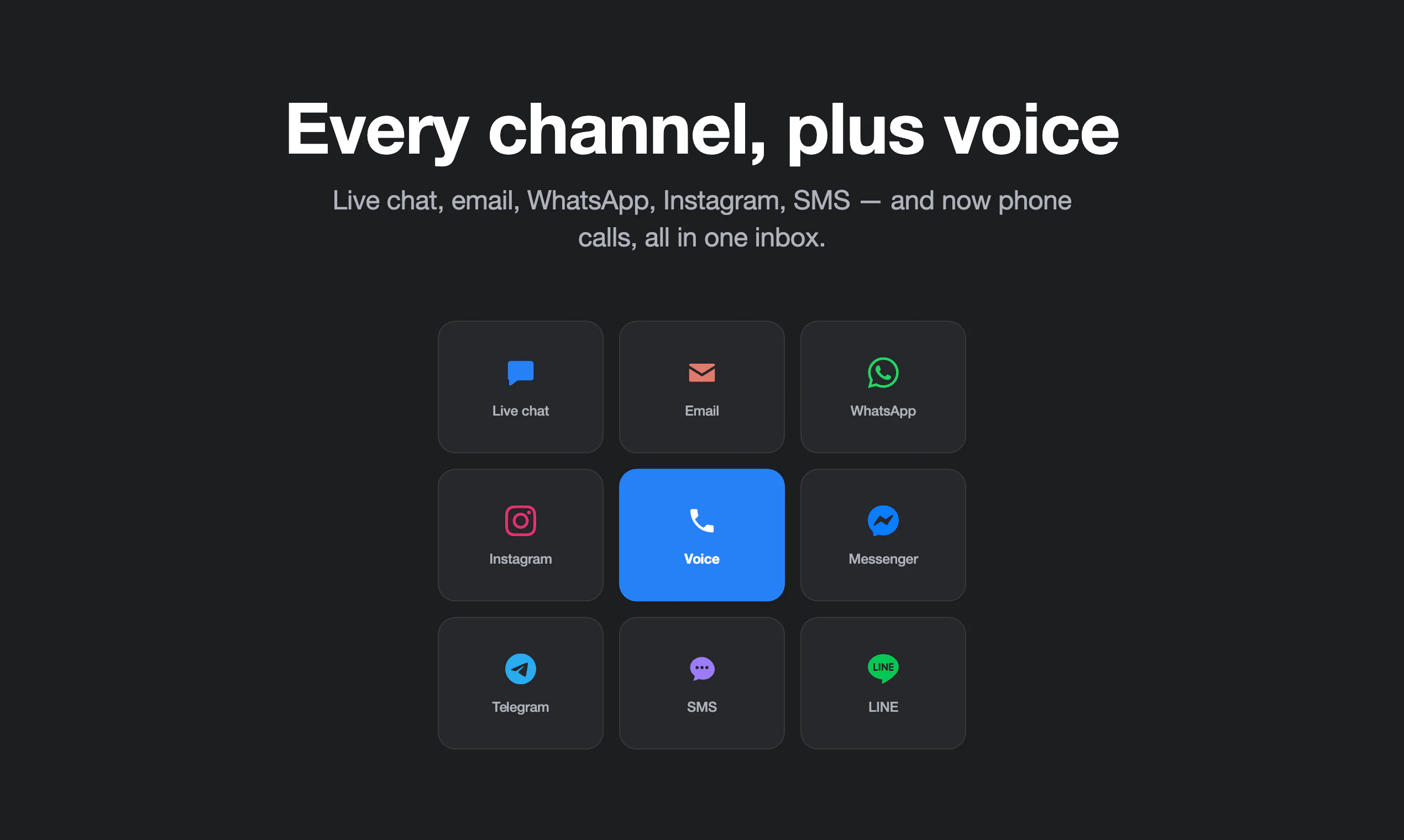
Chatwoot Voice has everything your support team needs to handle customer calls without leaving the inbox: browser-based calling, inbound and outbound phone support, Twilio Voice integration, WhatsApp calling support, call recordings, transcripts, AI summaries, call history, and customer context in one conversation thread.
AI Analysis
Chatwoot Voice integrates browser-based calling, inbound/outbound phone support, Twilio Voice, and WhatsApp calling directly into the Chatwoot support inbox. Core features include call recordings, AI-generated transcripts and summaries, unified call history, and full customer context within a single conversation thread alongside chats and emails. It solves key pain points of fragmented tools, lack of context when switching channels, and inefficient manual note-taking for support teams. As an open-source solution, its USP is delivering an affordable, customizable omnichannel inbox with AI enhancements that improves efficiency, collaboration, and customer satisfaction without requiring users to leave their existing workflow.
In 2025-2026, AI integration in customer support is maturing rapidly with widespread adoption of transcription and summarization tools. Omnichannel messaging demand continues to grow as businesses seek unified platforms amid remote/hybrid work trends. Twilio and WhatsApp voice APIs are stable and accessible, while economic pressures favor cost-effective open-source alternatives over expensive proprietary suites. Policy environments support digital communication innovation. This is an Excellent Timing as it aligns perfectly with the surge in AI-powered support tools and the shift toward consolidated customer engagement platforms.
Technical difficulty is moderate as it builds on the established open-source Chatwoot codebase and uses mature Twilio APIs for voice. AI features leverage accessible services like speech-to-text providers. Development and operation costs are manageable but include telephony per-minute fees and potential AI API costs. Compliance risks exist around call recording consent laws varying by region. Scalability is strong via cloud infrastructure, and it fits well with teams experienced in open-source customer support tools. Overall feasibility is High due to proven integrations and no major supply chain barriers.
Primary segments include customer support and success teams in SMBs, startups, and mid-market companies, particularly in SaaS, e-commerce, and tech industries. Geographic focus is global with strong traction in North America, Europe, and emerging markets like India and Southeast Asia where open-source tools are popular. The broader customer experience software TAM exceeds $15B, with SAM for omnichannel/inbox platforms around $3-5B and SOM for open-source users in the hundreds of millions. Core pain points are tool fragmentation and missing context during customer interactions. Willingness to pay is high for premium AI features, cloud hosting, or enterprise support on top of the free open-source core.
Competition Level: Medium. Direct competitors: 1. Zendesk Talk (zendesk.com/talk), 2. Aircall (aircall.io), 3. Twilio Flex (twilio.com/flex), 4. Freshcaller (freshworks.com/freshcaller), 5. Gorgias (gorgias.com). Advantages vs competitors: native deep integration within popular open-source Chatwoot, built-in AI summaries/transcripts at competitive cost, seamless WhatsApp voice support, and unified threads for calls/chats/emails. Disadvantages: relies on third-party telephony providers increasing variable costs, may require more technical setup than fully hosted SaaS rivals, and has less brand recognition in enterprise voice than incumbents.
Upgrade Pro to unlock full AI analysis
Similar Products

Cercle
The bat signal for your closest friends.
▲ 121 votes

Orus
Claude for investing in perpetuals
▲ 121 votes

NanoKVM-Go
Give your AI agent physical control over any screen
▲ 110 votes

Onpilot
An AI workforce customized to your business
▲ 105 votes

CodeBurn
See where your AI coding spend actually goes
▲ 101 votes

Juggler
A visual AI coding harness
▲ 94 votes