
AI‑Native eCommerce Infrastructure
A unified control plane for Magento with Claude Code web
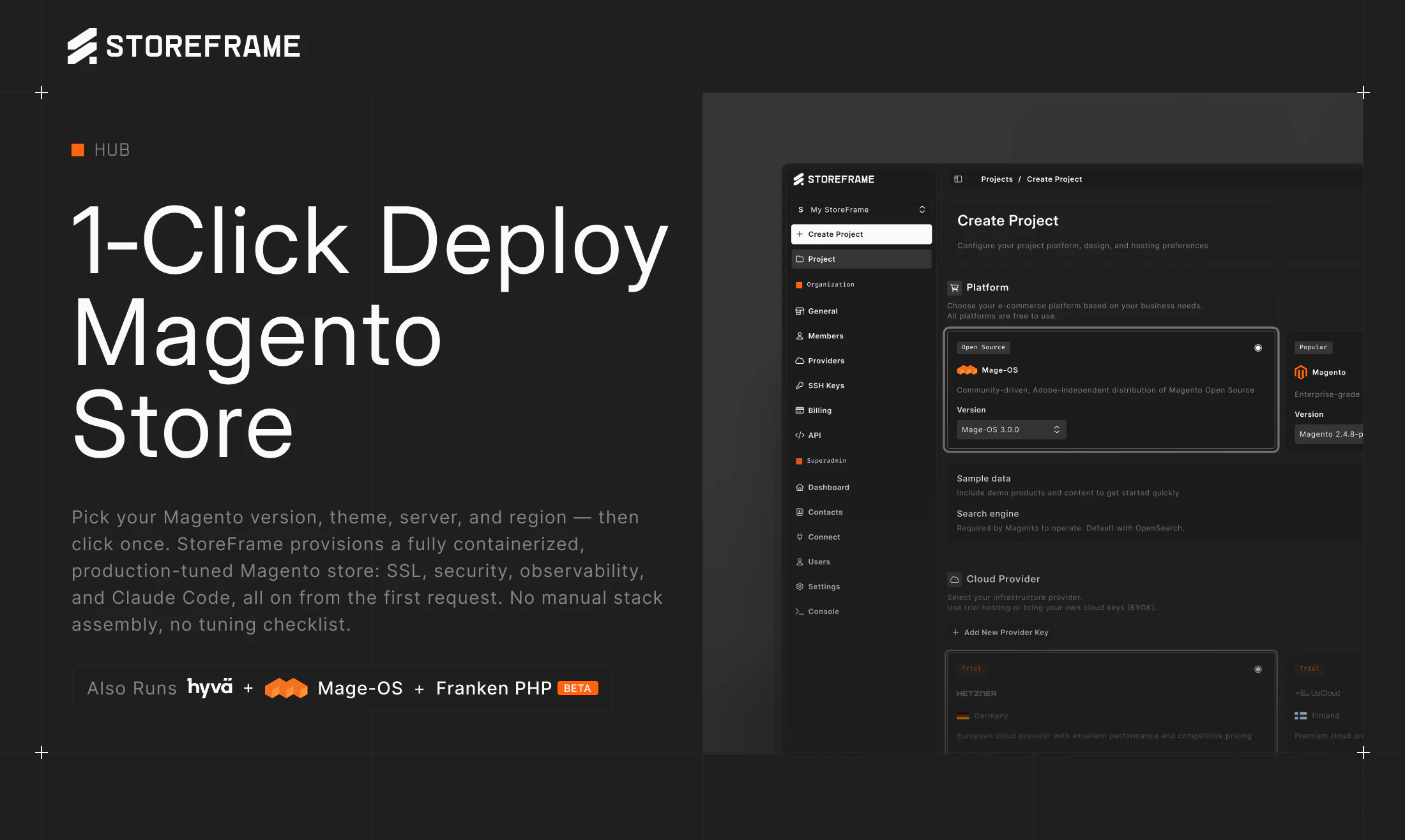
Where alot of Magento hosting started from a "restrictive" managed hosting, we take take a different approach by starting from a Control Panel. Built to accomodate Magento Developers - OpenSource contributors & operators where flexibility matters, especially in todays AI standards. The unified control plane is constructed from the ground up to be AI-Native. That means data pipelines are streamed in real-time prepared for AI to query everything for day to day operations.
AI Analysis
The AI-Native eCommerce Infrastructure offers a unified control plane for Magento, built from a flexible control panel rather than restrictive managed hosting. Core features include real-time data pipelines prepared for AI querying (integrated with Claude Code web) to streamline day-to-day operations. It targets Magento developers, open-source contributors, and operators, solving key pain points like limited hosting flexibility, manual management inefficiencies, and lack of AI readiness in traditional eCommerce infrastructure. The USP is its ground-up AI-native architecture emphasizing adaptability in modern AI standards. Overall value proposition: Deliver intelligent, developer-centric operations that leverage AI for efficiency and innovation in Magento environments.
In 2025-2026, AI technologies like Claude are maturing rapidly, with strong industry trends toward AI automation in eCommerce and dev tools. User demands for intelligent infrastructure are rising amid growing online retail and AI adoption policies. Economic focus on efficiency makes this a strong fit. Excellent Timing.
Medium. Technical difficulty is moderate-high due to complex Magento integration, real-time streaming pipelines, and seamless Claude AI embedding. Dev/operation costs are significant initially but scalable with cloud infrastructure. Low supply chain/compliance risks as a SaaS tool; strong scalability potential for AI queries. Requires specialized team expertise in eCommerce platforms and AI.
Main segments: Magento developers, open-source contributors, and eCommerce platform operators (technical professionals aged 25-45). Industries: E-commerce, retail tech, web development. Geographic: Global with concentration in North America, Europe. TAM/SAM/SOM: Part of the multi-billion dollar eCommerce platforms market; Magento-specific tools SAM estimated at $200-500M. Core pain points: inflexible hosting and operational bottlenecks without AI support. High willingness to pay for time-saving AI-driven tools.
Low. Direct competitors: 1. Adobe Commerce (adobe.com/commerce), 2. Nexcess (nexcess.net), 3. Platform.sh (platform.sh), 4. Acquia (acquia.com), 5. MageMojo (magemojo.com). Advantages: True AI-native design with real-time pipelines and Claude integration, greater flexibility for developers vs restrictive hosting. Disadvantages: Newer/less established brand, potentially higher initial complexity compared to mature managed services with broader support ecosystems.
Upgrade Pro to unlock full AI analysis
Similar Products

Cohere Parse 5
Turn complex docs, tables & images into AI-ready data
▲ 158 votes

Adapt
The company brain that gets work done
▲ 124 votes

Tapfree for Chrome
Voice dictation that adapts to what’s on your screen
▲ 122 votes

React UI Kit V7
All the chat components you need. None of the complexity
▲ 115 votes

Replay QA Security Scan
Automated Penetration Testing for AI-Built Apps
▲ 102 votes

CodeBurn
See where your AI coding spend actually goes
▲ 101 votes