
Antigravity IDE Extensions
Antigravity agents now live inside your existing editor
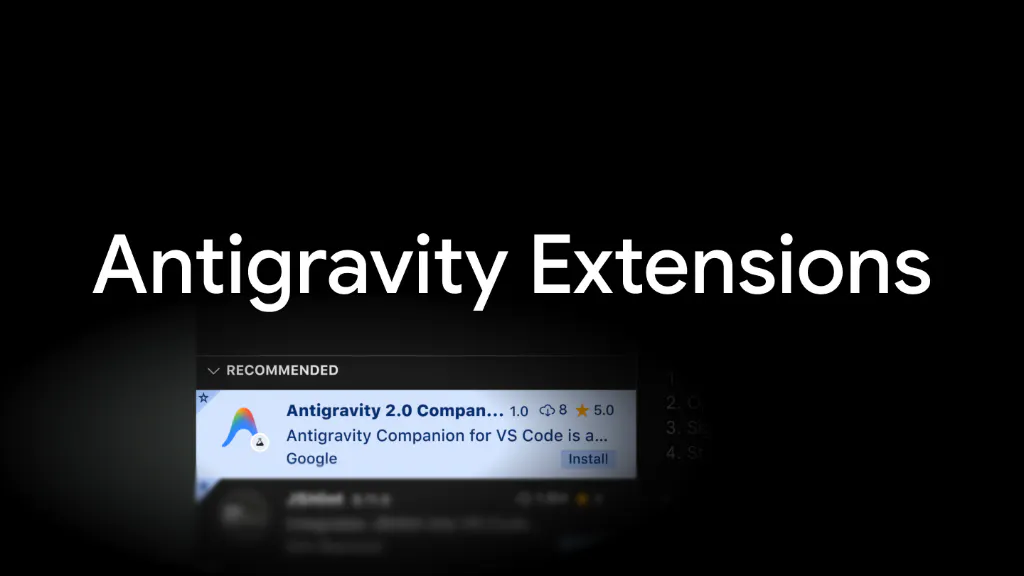
Antigravity IDE Extensions bring Google’s agentic coding platform into VS Code, Visual Studio, JetBrains, and Zed. Keep your agent conversations and shared context while reviewing inline diffs, inspecting plans, debugging code, and handing off multi-step tasks without leaving your editor.
AI Analysis
Antigravity IDE Extensions integrate Google’s agentic coding platform into VS Code, Visual Studio, JetBrains, and Zed. Core features include preserving agent conversations and shared context, reviewing inline diffs, inspecting plans, debugging code, and managing multi-step tasks entirely within the editor. It solves key pain points of workflow disruption and context loss from switching between external AI interfaces and IDEs. The USP is seamless, native agentic AI experience that maintains continuity, significantly boosting developer productivity and efficiency in AI-assisted software engineering.
In 2025-2026, with surging adoption of agentic AI, maturing LLM technologies enabling complex multi-step coding agents, and strong developer demand for integrated AI tools to boost productivity amid economic pressures, the timing aligns perfectly with industry trends toward AI-native IDEs. Excellent Timing.
Technical difficulty is moderate using established IDE extension APIs across four platforms; development and operation costs are manageable with Google platform backing. Low supply chain/compliance risks for software tools, good team fit for AI/dev tool developers, and strong scalability via cloud AI. Overall rating: High.
Primary users: Professional software developers and engineers (25-45 years old) in tech startups, software firms, and enterprises; global distribution with concentration in North America, Europe, China. TAM for AI dev tools ~$10B by 2026, SAM for IDE AI integrations ~$2B, SOM focused on Google ecosystem users. Core pains: context switching and fragmented AI workflows. High willingness to pay ($10-30/mo) for productivity tools like Copilot.
Medium. Direct competitors: 1. GitHub Copilot (github.com/features/copilot), 2. Cursor (cursor.com), 3. JetBrains AI Assistant (jetbrains.com/ai), 4. Tabnine (tabnine.com), 5. Continue.dev (continue.dev). Advantages: Superior persistent context for agentic multi-step tasks and native Google integration. Disadvantages: Newer entrant with potential ecosystem lock-in to Google, less established user base and broader feature maturity compared to Copilot and Cursor.
Upgrade Pro to unlock full AI analysis
Similar Products

Cohere Parse 5
Turn complex docs, tables & images into AI-ready data
▲ 158 votes

Adapt
The company brain that gets work done
▲ 124 votes

Replay QA Security Scan
Automated Penetration Testing for AI-Built Apps
▲ 102 votes

WikiFix for Confluence
Find and fix issues in your knowledge base
▲ 86 votes

Audryo
Customer email your agent can operate.
▲ 68 votes

Refoid
Automate App Store refund responses and track every outcome
▲ 68 votes