
Appwrite 2.0
The open-source cloud for agents and developers
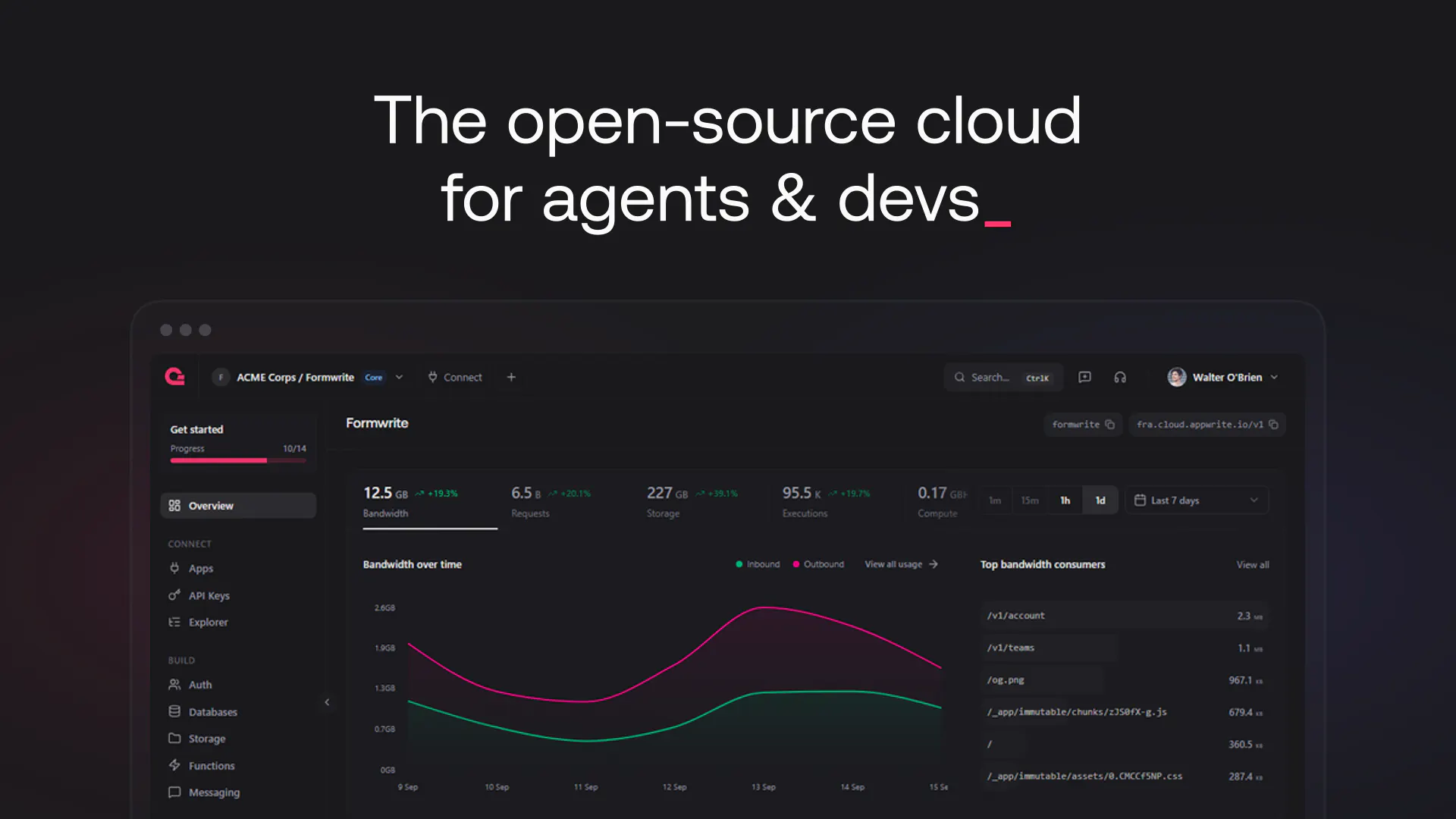
Appwrite 2.0 is the second major generation of the platform. It replaces the engine underneath, rebuilds the Console on top, and expands what a project can hold: relational and schemaless and vector data, native PostgreSQL and MySQL engines, S3-addressable storage, a standards-compliant identity provider, and the network layer in front of all of it.
AI Analysis
Appwrite 2.0 is an open-source cloud platform for developers and AI agents. It features a rebuilt engine and console, supporting relational, schemaless, and vector data models, native PostgreSQL and MySQL engines, S3-addressable storage, and a standards-compliant identity provider. It solves key pain points like fragmented backend infrastructure, complex data integration for AI applications, vendor lock-in, and managing multiple services. Unique selling points include its unified, flexible approach to diverse data types and open-source nature allowing self-hosting or cloud use. Overall value proposition: Empower faster, scalable development of apps and AI agents without proprietary constraints.
The timing is favorable for 2025-2026 due to surging AI agent adoption requiring vector databases and robust backends, maturing multi-database technologies, rising demand for open-source alternatives amid cloud cost concerns, and supportive developer ecosystem trends. Economic focus on flexibility further boosts it. Excellent Timing.
High. Technical challenges of integrating multiple DB engines and layers are mitigated by using mature open-source components like PostgreSQL. Development and operation costs are manageable for open-source with community support. Low supply chain risks; compliance is standard for software. Strong scalability as demonstrated in the platform design. Suitable for experienced dev teams.
Primary segments: Software developers, AI engineers, startups, and tech enterprises building web/mobile/AI apps; global with concentration in North America, Europe. BaaS and dev tools market is large and expanding rapidly. Core pain points: Backend complexity, data silos, and high proprietary costs. Strong willingness to pay for managed hosting and premium support while core remains free/open-source.
Medium. Direct competitors: Supabase (supabase.com), Firebase (firebase.google.com), PocketBase (pocketbase.io), Nhost (nhost.co). Advantages vs competitors: Broader native support for relational/schemaless/vector data, open-source flexibility without lock-in, rebuilt console for usability. Disadvantages: Less market dominance than Firebase, requires more setup for self-hosting compared to fully managed rivals.
Upgrade Pro to unlock full AI analysis
Similar Products

Cohere Parse 5
Turn complex docs, tables & images into AI-ready data
▲ 158 votes

Adapt
The company brain that gets work done
▲ 124 votes

Tapfree for Chrome
Voice dictation that adapts to what’s on your screen
▲ 122 votes

React UI Kit V7
All the chat components you need. None of the complexity
▲ 115 votes

Replay QA Security Scan
Automated Penetration Testing for AI-Built Apps
▲ 102 votes

CodeBurn
See where your AI coding spend actually goes
▲ 101 votes