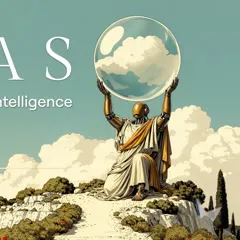
Atlas by World Labs
Turn text, pics, video, + 3D into camera-controlled HD video
Atlas is World Labs' omni world model. It takes text, images, video, and 3D, then generates camera-controlled 1440p video up to a minute, reconstructs scenes from a few photos, and simulates space-time for robotics. Early access.
AI Analysis
Atlas by World Labs is an omni world model that transforms text, images, video, and 3D inputs into precisely camera-controlled 1440p videos up to one minute long. It reconstructs 3D scenes from sparse photos and simulates space-time physics for robotics. USP is its unified multimodal 'world model' enabling spatial intelligence beyond simple video generation. It solves pain points like imprecise control in AI content tools, labor-intensive 3D reconstruction, and limited physical understanding in simulations. Value proposition: empowers developers, creators, and engineers with efficient, high-fidelity tools for immersive content and real-world AI applications in early access phase.
The current market timing is favorable. In 2025-2026, generative AI video and spatial intelligence technologies are maturing rapidly following successes like Sora and NeRF advancements. User demands are shifting towards controllable, physics-aware multimodal tools for media and robotics. Strong VC investment in AI, supportive policies for tech innovation, and industry trends toward embodied AI and AR/VR make this Excellent Timing. Atlas is well-positioned at the intersection of these waves.
Overall feasibility is High. The founding team has top-tier AI expertise (led by renowned scientist Fei-Fei Li), and the product has reached early access, demonstrating technical viability despite high complexity in multimodal world modeling and physics simulation. Development costs are substantial (compute-intensive), but scalability via API/cloud is strong. Supply chain risks are low; main challenges are ongoing model refinement and regulatory compliance for AI. Team fit and potential for expansion into robotics are excellent.
Main target segments: AI/ML developers and researchers (tech-savvy, 25-45yo), digital content creators and filmmakers in entertainment/gaming, robotics engineers in automotive/industrial sectors. Primarily based in US, Europe, and East Asia. Estimated TAM for generative AI media/tools ~$50B+ by 2026; SAM for video/world models ~$5B; SOM for early access spatial AI ~$500M. Core pain points: inefficient production pipelines and lack of spatial control. High willingness to pay via usage-based pricing or subscriptions among professionals.
Medium. Direct competitors: 1. OpenAI Sora (openai.com), 2. Runway Gen-3 (runwayml.com), 3. Luma AI Dream Machine (lumalabs.ai), 4. Kling AI (klingai.com), 5. Pika 1.5 (pika.art). Atlas advantages: unique omni-input support including native 3D, explicit long-term camera control, scene reconstruction, and robotics-focused simulation for better physical fidelity. Disadvantages: early access limits availability vs. more public competitors, pricing not yet transparent, and less established ecosystem compared to OpenAI/Runway.
Upgrade Pro to unlock full AI analysis
Similar Products

Cohere Parse 5
Turn complex docs, tables & images into AI-ready data
▲ 158 votes

Adapt
The company brain that gets work done
▲ 124 votes

Replay QA Security Scan
Automated Penetration Testing for AI-Built Apps
▲ 102 votes

WikiFix for Confluence
Find and fix issues in your knowledge base
▲ 86 votes

Audryo
Customer email your agent can operate.
▲ 68 votes

Refoid
Automate App Store refund responses and track every outcome
▲ 68 votes