blokdots 3.0
sketching with hardware
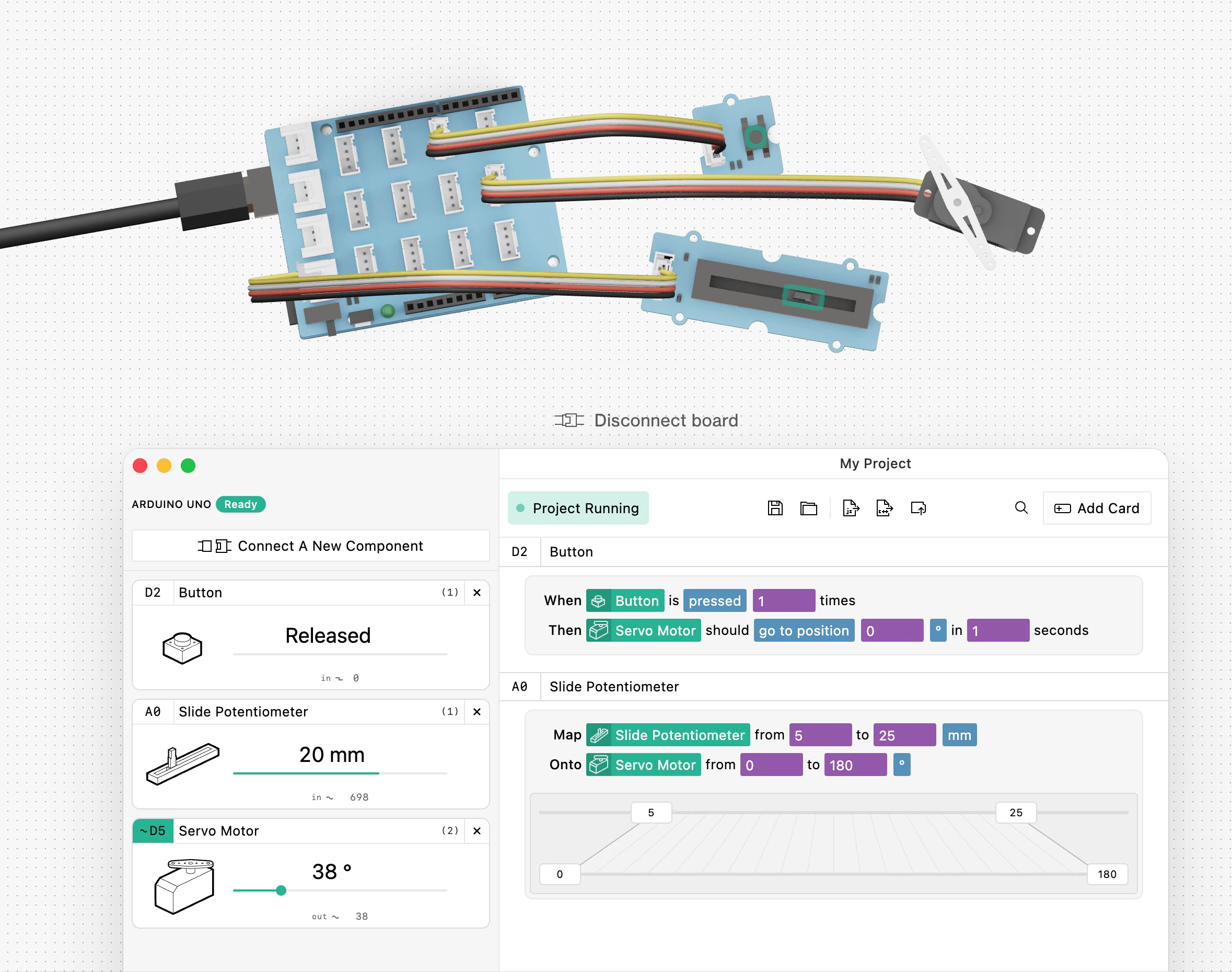
blokdots is a visual tool for building interactive hardware. Connect sensors, motors, and more with a simple trigger-action interface — no coding required. 3.0 is a ground-up rebuild with our own C++ framework — replacing Firmata entirely. Export real C++ or JavaScript code, hand off to engineering, or go fully standalone: upload directly to Arduino, no more laptop needed! Connects to ProtoPie, Figma, and Socket.IO for integrated UI + hardware prototyping.
AI Analysis
blokdots 3.0 is a no-code visual tool for building interactive hardware prototypes. Users connect sensors, motors, and components via an intuitive trigger-action interface without coding. Core features include a custom C++ framework replacing Firmata for better performance, exporting real C++ or JavaScript code, direct upload to Arduino for fully standalone operation without a laptop, and seamless integrations with ProtoPie, Figma, and Socket.IO. It solves key pain points for designers: the coding barrier and tethered laptop dependency in hardware prototyping. USP is enabling fast sketching of physical interactions and smooth handoff to engineering or production.
In 2025-2026, market timing is favorable due to maturing no-code tools, growing IoT and physical computing demand, and designers' need for tangible prototyping amid AI/UI advancements. Integrations with Figma/ProtoPie align with modern design workflows. Economic focus on innovation and hardware democratization supports adoption. Excellent Timing.
High feasibility. Technical difficulty is low as v3.0 is already rebuilt and launched with custom framework. Development/operation costs are moderate for SaaS-like software with hardware support. Minimal supply chain or compliance risks by leveraging existing Arduino ecosystem. Strong scalability via exports and integrations; fits well for a specialized team in design tools. Key risks are maintaining component compatibility.
Main targets: UX/UI and industrial designers, product prototypers, makers, and design educators. Industries: design agencies, IoT/consumer electronics startups, edtech. Geographic: primarily North America, Europe, East Asia tech hubs. TAM for no-code prototyping tools exceeds $500M with hardware segment SAM ~$150M; SOM niche but growing. Core pains: coding barriers and slow hardware iteration. Willingness to pay is high for time-saving pro features (likely subscription).
Medium. Direct competitors: 1. Node-RED (nodered.org), 2. Blynk (blynk.io), 3. Microsoft MakeCode (makecode.com), 4. Arduino IoT Cloud (cloud.arduino.cc), 5. Snap4Arduino (snap4arduino.org). Advantages: standalone Arduino operation, design tool integrations (Figma/ProtoPie), clean trigger-action UI, code export for handoff. Disadvantages: narrower hardware ecosystem than Arduino defaults, newer framework may have less third-party support. Strong differentiation in designer-focused no-code hardware sketching with no laptop tethering.
Upgrade Pro to unlock full AI analysis
Similar Products

Loot
Collect your favorite things in real life
▲ 115 votes
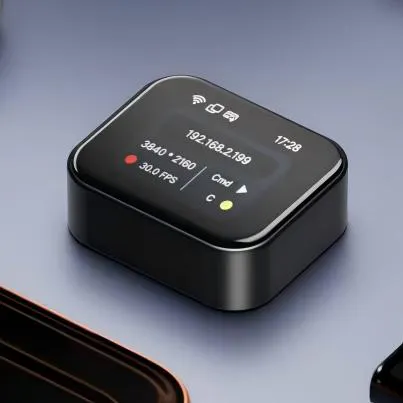
NanoKVM-Go
Give your AI agent physical control over any screen
▲ 110 votes

Bilt.me - Figma
Get a real mobile app from your Figma design
▲ 98 votes

LayerProof Kraft
Co-write insightful long form content
▲ 84 votes

Polygram
AI-native design and coding app to build mobile & web apps
▲ 81 votes

Bevell
CAD automation where it counts.
▲ 78 votes