
Chunk sidecars
Validate agent-generated code before it ever reaches CI
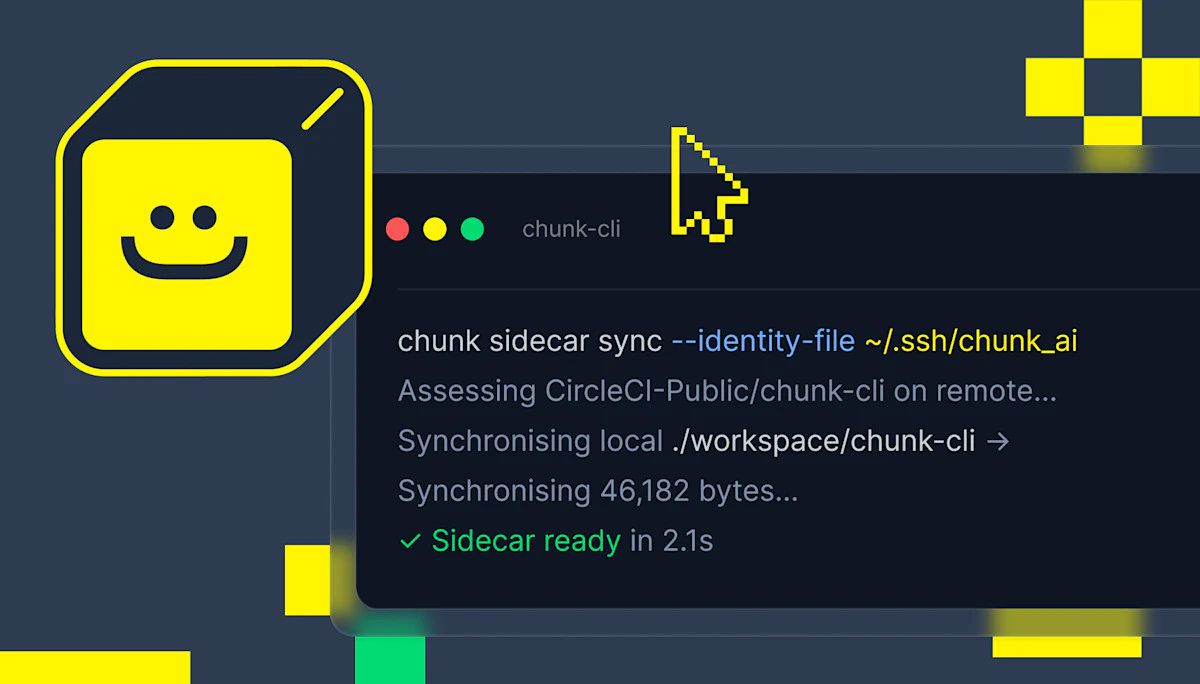
AI agents write code fast. Validation still happens after the push — by then the context is gone. Chunk sidecars run scoped microbuilds before commit, in a real CI mirror. Auto-detects your stack. ~27s average vs ~5 min billable compute for a full run. 3x–5x fewer tokens in retry loops. If something fails, the agent iterates before anything reaches shared CI. Run chunk init. Works with Claude Code, Codex, Cursor, or custom agents. Free for all CircleCI users.
AI Analysis
Chunk Sidecars solves the pain of validating AI agent-generated code after pushing to CI, when context is lost leading to inefficient retries. Core features: runs scoped microbuilds in a real CI mirror before commit, auto-detects tech stack, averages ~27s vs ~5min full runs, reduces tokens in retry loops by 3x-5x. Agents can iterate on failures early. USP: seamless integration with Claude Code, Codex, Cursor or custom agents via 'chunk init'. Free for CircleCI users. Value: faster AI dev cycles, lower compute costs, better agent performance.
In 2025-2026, AI coding agents are maturing rapidly with widespread adoption of tools like Cursor and Claude, driving demand for tighter feedback loops to cut token costs and accelerate iteration. Developer workflows are shifting to agentic coding, and economic focus on optimizing CI compute aligns perfectly. This is a strong fit for current trends. Excellent Timing.
High. Technical difficulty is medium as it mirrors existing CI (CircleCI) with auto-detection; no complex new infrastructure needed. Low dev/operation costs due to short microbuilds. Minimal compliance risks for dev tool. Strong scalability with growing AI agent use. Good team fit for CI/AI specialists.
Primary users: individual developers and engineering teams using AI agents (Claude Code, Cursor) who rely on CircleCI for CI/CD. Industries: software/tech companies. Geographic: global with concentration in North America/Europe. Core pain points: lost context in post-push validation, high token/compute waste. Estimated market: growing rapidly alongside AI dev tools boom; high willingness to pay for efficiency (freemium via CircleCI free tier).
Medium. Direct competitors: 1. CodiumAI (codium.ai) - AI code testing. 2. GitHub Copilot Workspace (github.com/features/copilot). 3. Sourcegraph Cody (sourcegraph.com/cody). 4. Harness AI (harness.io). Advantages: pre-commit real CI mirror for fresh context, speed/token savings, CircleCI free integration. Disadvantages: narrower scope (CI-focused), dependency on specific agents/CircleCI ecosystem.
Upgrade Pro to unlock full AI analysis
Similar Products

Cohere Parse 5
Turn complex docs, tables & images into AI-ready data
▲ 158 votes

Adapt
The company brain that gets work done
▲ 124 votes

Replay QA Security Scan
Automated Penetration Testing for AI-Built Apps
▲ 102 votes

WikiFix for Confluence
Find and fix issues in your knowledge base
▲ 86 votes

Audryo
Customer email your agent can operate.
▲ 68 votes

Refoid
Automate App Store refund responses and track every outcome
▲ 68 votes