
Enter Pro
The AI-native platform to build and scale your apps
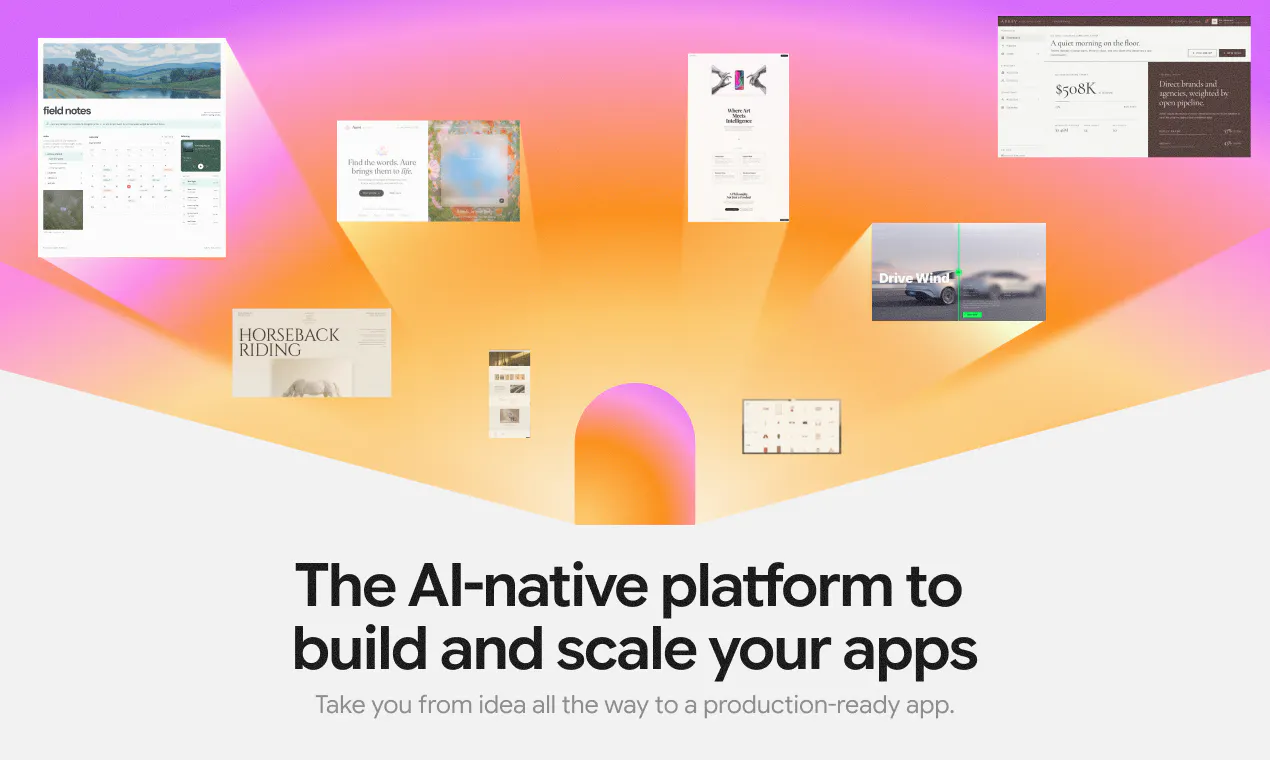
Building what runs a business takes more than code. Enter Pro is the AI-native platform that turns an idea into a working product. Plan, build, preview, launch, and scale apps, websites, and custom AI agents in one continuous workspace. Models, databases, authentication, hosting, payments, analytics, and localization are built in—so teams can ship software built for real business, not just prototypes.
AI Analysis
Enter Pro is an AI-native platform that turns ideas into working products by allowing users to plan, build, preview, launch, and scale apps, websites, and custom AI agents in one continuous workspace. Core features include integrated AI models, databases, authentication, hosting, payments, analytics, and localization. It addresses pain points like fragmented development tools, slow iteration from prototype to production, and infrastructure management complexity. The value proposition is enabling teams to ship scalable, business-ready software faster without multiple disparate services, combining no-code accessibility with deep AI capabilities.
In 2025-2026, market timing is highly favorable due to maturing AI technologies (e.g., advanced LLMs and agent frameworks), accelerating adoption of no-code tools amid developer shortages, and rising demand for integrated platforms that bridge prototyping to enterprise-scale apps. Economic focus on efficiency and AI-driven innovation supports this. The product's emphasis on AI agents aligns with exploding interest in autonomous systems. Excellent Timing.
Technical integration of AI, databases, payments, and hosting is complex but feasible with current mature cloud and AI APIs. Operational costs for AI inference and scaling could be high, with compliance risks in data privacy and payments. Strong scalability potential via cloud infrastructure. Assuming an experienced team, overall feasibility is High, though ongoing maintenance of AI accuracy and multi-feature reliability will be key challenges.
Main target segments: indie developers, startup teams, product managers, and SMBs in tech, SaaS, e-commerce, and digital services industries, primarily in North America, Europe, with global reach. TAM for no-code/low-code market projected >$20B by 2026; AI-enhanced dev platforms SAM ~$3-5B; SOM for similar AI-native tools in hundreds of millions. Core pains: lengthy dev cycles, high costs, tool fragmentation. High willingness to pay for time-saving all-in-one platforms (typical pricing tiers $29-$499/mo).
Medium. Direct competitors: 1. Bubble (bubble.io), 2. Webflow (webflow.com), 3. FlutterFlow (flutterflow.io), 4. Softr (softr.io), 5. Langflow (langflow.org). Advantages vs competitors: deeper AI-native integration for full lifecycle (planning to scaling) and business features like payments/localization in one workspace; avoids prototype-only limitation. Disadvantages: likely newer with smaller ecosystem/community than Bubble/Webflow; potential higher costs for AI usage and less visual builder maturity.
Upgrade Pro to unlock full AI analysis
Similar Products

Cohere Parse 5
Turn complex docs, tables & images into AI-ready data
▲ 158 votes

Adapt
The company brain that gets work done
▲ 124 votes

Replay QA Security Scan
Automated Penetration Testing for AI-Built Apps
▲ 102 votes

WikiFix for Confluence
Find and fix issues in your knowledge base
▲ 86 votes

Audryo
Customer email your agent can operate.
▲ 68 votes

Refoid
Automate App Store refund responses and track every outcome
▲ 68 votes