
Intelligent Terminal
Windows Terminal with native agent integration
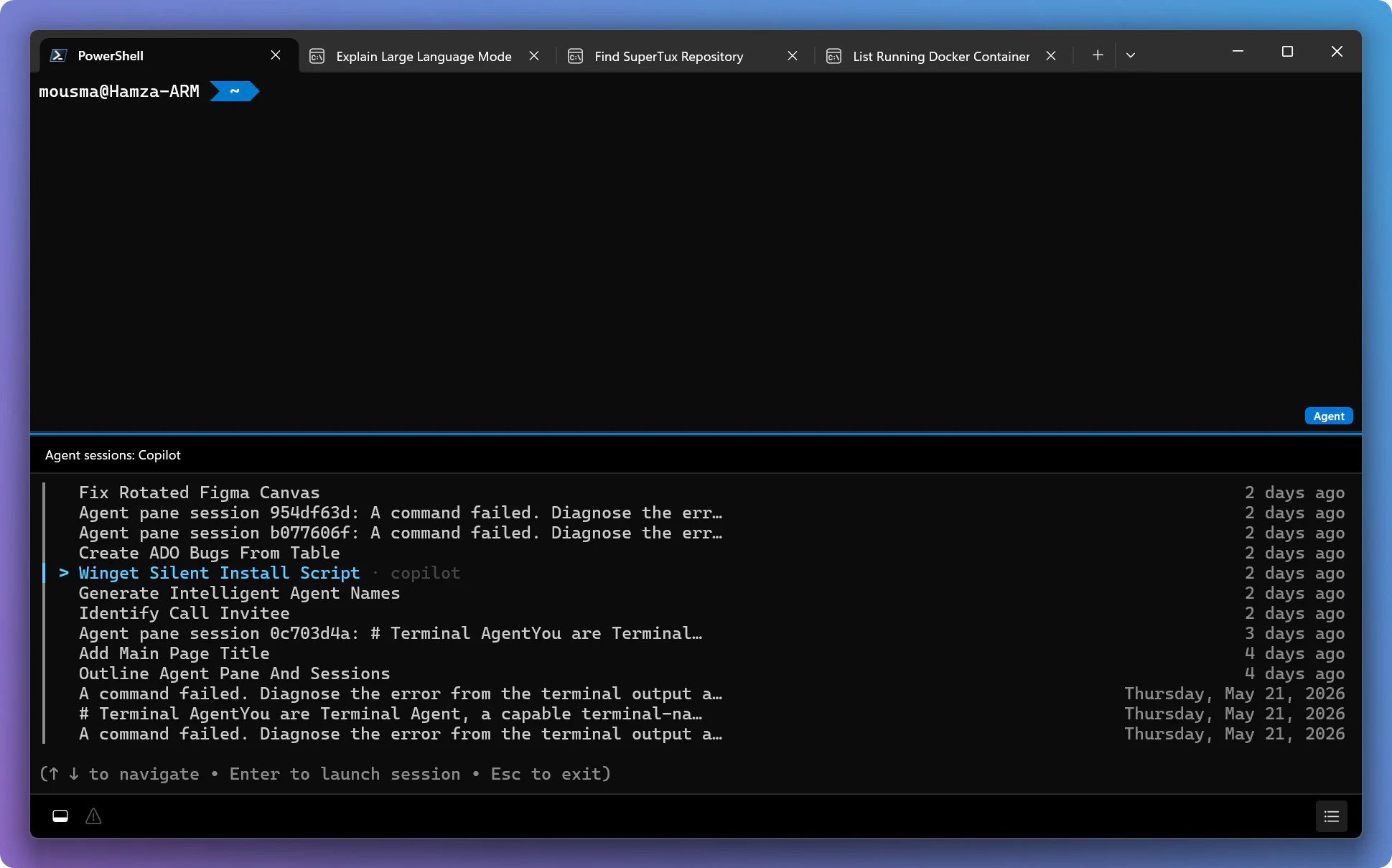
Intelligent Terminal is an open-source experimental fork of Windows Terminal with native agent integration. It adds an agent status bar, context-aware agent pane, automatic error detection, session management, and command palette prompts for ACP-compatible agent CLIs.
AI Analysis
Intelligent Terminal is an open-source experimental fork of Windows Terminal with native AI agent integration. Core features include an agent status bar, context-aware agent pane, automatic error detection, session management, and command palette prompts for ACP-compatible agent CLIs. It addresses developer pain points such as lack of seamless AI context in terminals, manual error troubleshooting, and inefficient agent session handling. The value proposition is enhanced productivity through deeply integrated AI assistance directly within a familiar terminal environment for AI-augmented development workflows.
The timing is favorable for 2025-2026 as AI agents and autonomous coding tools are reaching maturity, with surging demand for deeper integration into core developer environments like terminals. Industry trends favor AI-native devtools amid economic pressures for productivity gains. Excellent Timing.
High - Leverages existing open-source Windows Terminal codebase, reducing technical barriers. Development costs are moderate for a small team or community effort; primary risks involve integration stability with evolving AI agents and maintaining compatibility. Strong scalability as a GitHub-hosted project with potential for community contributions.
Primary users: Software developers, AI/ML engineers, and technical power users focused on agentic AI workflows (ages 25-40), heavily in tech/software industries. Global distribution with concentration in US, Europe, and East Asia. Developer tools TAM exceeds $10B; AI devtools SAM ~$2B with SOM in millions for terminal segment. Pain points center on fragmented AI-terminal interactions. Open-source model suggests low direct willingness to pay but potential for sponsorships or premium extensions.
Medium. Direct competitors: 1. Warp (warp.dev), 2. Amazon Q CLI (aws.amazon.com/q), 3. Fig (acquired, now integrated in terminals), 4. Aider (aider.chat), 5. Open Interpreter. Advantages: Specialized native agent integration and status UI tailored for ACP agents, fully open-source. Disadvantages: Experimental nature may limit reliability; narrower scope compared to broader AI features in Warp or Aider; Windows-focused vs cross-platform rivals.
Upgrade Pro to unlock full AI analysis
Similar Products

Cohere Parse 5
Turn complex docs, tables & images into AI-ready data
▲ 158 votes

Adapt
The company brain that gets work done
▲ 124 votes

Replay QA Security Scan
Automated Penetration Testing for AI-Built Apps
▲ 102 votes

WikiFix for Confluence
Find and fix issues in your knowledge base
▲ 86 votes

Audryo
Customer email your agent can operate.
▲ 68 votes

Refoid
Automate App Store refund responses and track every outcome
▲ 68 votes