
Modeinspect
Design production UI in your codebase
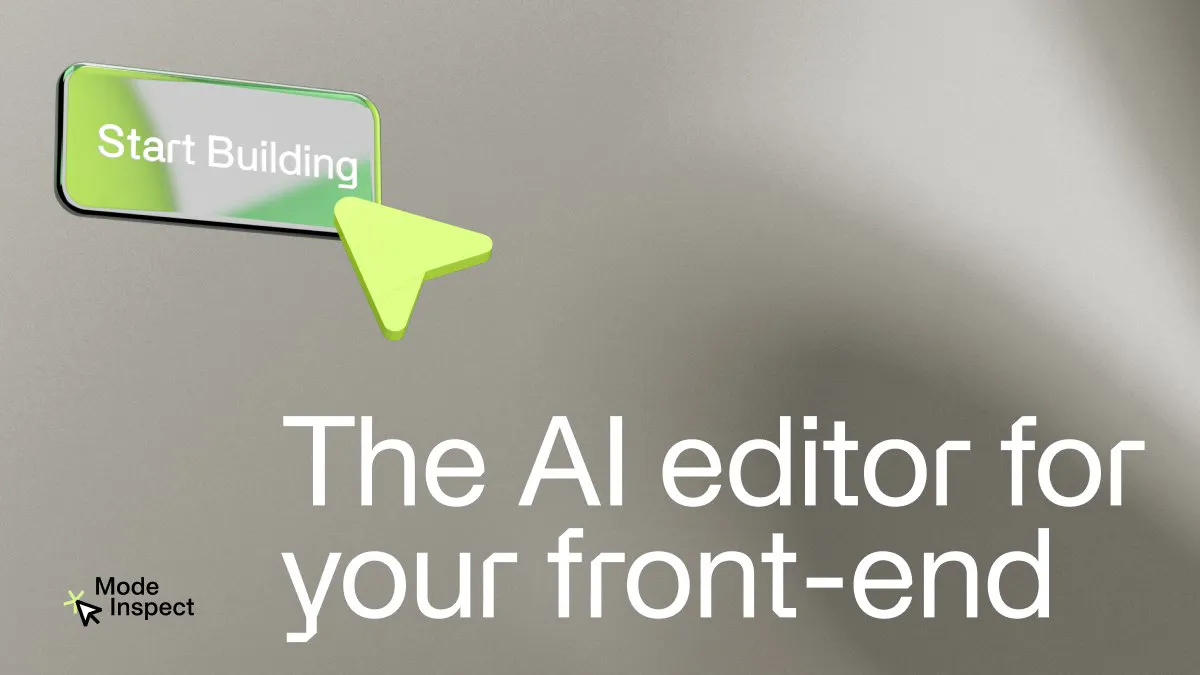
Most software is designed twice: a picture first, then again in code. Intent drifts in between. Modeinspect is the AI design canvas for working on the real thing. Connect your codebase, open an existing screen, and design with your components, tokens, live data, states, and breakpoints. Explore with AI. Keep details that matter. When ready, publish your changes live or send them to engineering for review. You decide when they go live. The canvas is not the destination. The product is.
AI Analysis
Modeinspect is an AI design canvas that connects directly to your codebase for designing production UIs using real components, tokens, live data, states, and breakpoints. It solves the pain of software being designed twice (mockup then code) and intent drift by enabling design on the actual product. Core features include AI-powered exploration, preserving key details, and user-controlled publishing of changes live or for engineering review. The value proposition is bridging design and development seamlessly for higher fidelity, faster iteration, and control over when updates go live.
The current market timing is favorable for 2025-2026 due to maturing AI technologies for code understanding and UI generation, booming demand for AI dev tools (e.g. similar to GitHub Copilot, Vercel v0), and industry shift toward reducing design-to-code friction amid rapid digital product iteration. Changing user demands favor integrated workflows over separate design handoffs. Supportive economic environment for productivity SaaS. Excellent Timing.
Overall feasibility is Medium. High technical difficulty in integrating with diverse codebases, parsing components across frameworks, ensuring AI-generated designs are valid/production-ready, and handling real-time states/breakpoints. AI inference and cloud ops costs are significant. Supply chain risks low but compliance/security for codebase access is a concern. Strong scalability potential via SaaS model if integrations are standardized; best fit for teams with AI and frontend expertise.
Main target segments: Frontend developers, UI/UX designers with coding skills, and product teams in SaaS/tech startups and enterprises. Demographics: tech professionals aged 25-40. Geographic: primarily North America and Europe. Estimated market: Developer tools TAM ~$15B+, AI-enhanced design/dev tools SAM ~$2B by 2026, SOM ~$100M for this niche. Core pain points: design-dev misalignment and handoff losses. High willingness to pay for productivity gains (likely subscription model $20-100/user/month).
Medium. Direct competitors: 1. Figma (figma.com) with Dev Mode, 2. Vercel v0 (v0.dev), 3. Builder.io (builder.io), 4. Locofy (locofy.ai), 5. Anima (animaapp.com). Advantages vs competitors: works on real production codebase with live data/states (not mockups), unique AI canvas for exploration, and user-controlled live publishing for better fidelity/control. Disadvantages: likely steeper setup/integration than pure design tools, newer with less brand recognition, potential compatibility limits across frameworks. Strong differentiation in 'design the real thing'.
Upgrade Pro to unlock full AI analysis
Similar Products

Cohere Parse 5
Turn complex docs, tables & images into AI-ready data
▲ 158 votes

Adapt
The company brain that gets work done
▲ 124 votes

Replay QA Security Scan
Automated Penetration Testing for AI-Built Apps
▲ 102 votes

WikiFix for Confluence
Find and fix issues in your knowledge base
▲ 86 votes

Audryo
Customer email your agent can operate.
▲ 68 votes

Refoid
Automate App Store refund responses and track every outcome
▲ 68 votes