
Robinhood Agentic Trading
Let your agent trade
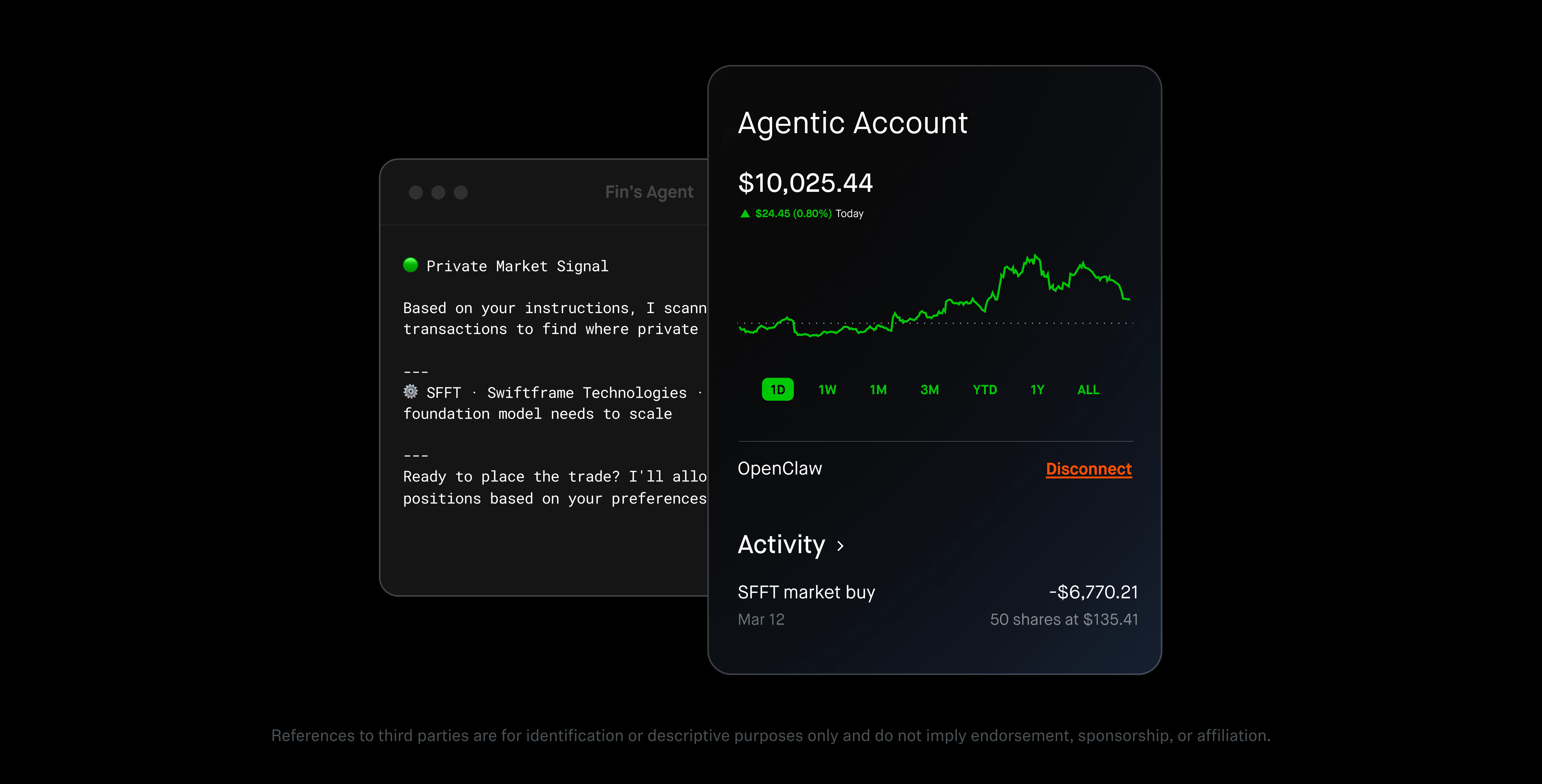
Customers can connect their own AI agents to Robinhood to help manage and automate trading and credit card purchases, with built-in safety controls and a real-time activity feed. Trade in a dedicated agentic account to stay in control of every trade your agent makes.
AI Analysis
Robinhood Agentic Trading allows customers to connect their own AI agents to automate trading and credit card purchases within the Robinhood ecosystem. Core features include built-in safety controls, a real-time activity feed, and a dedicated agentic account ensuring users retain full oversight of every trade. It addresses key pain points such as time-intensive market monitoring, emotional decision-making, and the complexity of 24/7 portfolio management. The value proposition centers on enabling intelligent, automated investing powered by AI while prioritizing user control, security, and compliance in a familiar fintech platform.
The market timing is favorable for 2025-2026 as agentic AI technologies are rapidly maturing with increased real-world applications, user demand for automated trading solutions is surging amid volatile markets, and fintech is integrating AI deeply. Economic pressures encourage hands-off investing tools, while policies are adapting to support AI innovation in finance despite growing oversight. This aligns perfectly with rising AI adoption in investing. Excellent Timing.
High. Robinhood possesses established trading infrastructure, regulatory compliance expertise, and API capabilities to support AI agent integration. Safety controls and dedicated accounts reduce key risks, though technical challenges in real-time monitoring and preventing erroneous trades exist. Development costs are manageable for an incumbent fintech; scalability is strong via existing user base. Main risks involve evolving AI-financial regulations but are mitigated by their experience.
Primary segments: Tech-savvy retail investors and AI enthusiasts in the US (ages 18-40, familiar with Robinhood app), plus developers creating AI agents for finance. Focus on personal investing and fintech users, mainly North America. Core pain points include lack of time for monitoring markets and difficulty in executing consistent strategies. The broader automated investing market shows strong demand; users demonstrate willingness to pay for premium automation features that offer control and potential returns.
Medium. Direct competitors: 1. Alpaca (alpaca.markets) - brokerage API for AI/algo trading; 2. Interactive Brokers (interactivebrokers.com) - TWS API for automated strategies; 3. Tradier (tradier.com) - developer-focused trading API; 4. QuantConnect (quantconnect.com) - cloud algo trading platform; 5. Composer.trade - no-code strategy automation. Advantages: Native Robinhood integration with safety controls, real-time feed, credit card automation, and dedicated accounts for easier oversight. Disadvantages: Potentially steeper learning curve for custom agents versus no-code tools, restricted to Robinhood's offerings and user base.
Upgrade Pro to unlock full AI analysis
Similar Products

Equitybee Benchmark
Compare your startup equity grant for free.
▲ 218 votes

Cohere Parse 5
Turn complex docs, tables & images into AI-ready data
▲ 158 votes

Opaline
PostHog for team Claude Code and Codex sessions.
▲ 141 votes

Adapt
The company brain that gets work done
▲ 124 votes

Orus
Claude for investing in perpetuals
▲ 121 votes

WikiFix for Confluence
Find and fix issues in your knowledge base
▲ 86 votes