
Trump Accounts
Build long-term financial security for your child
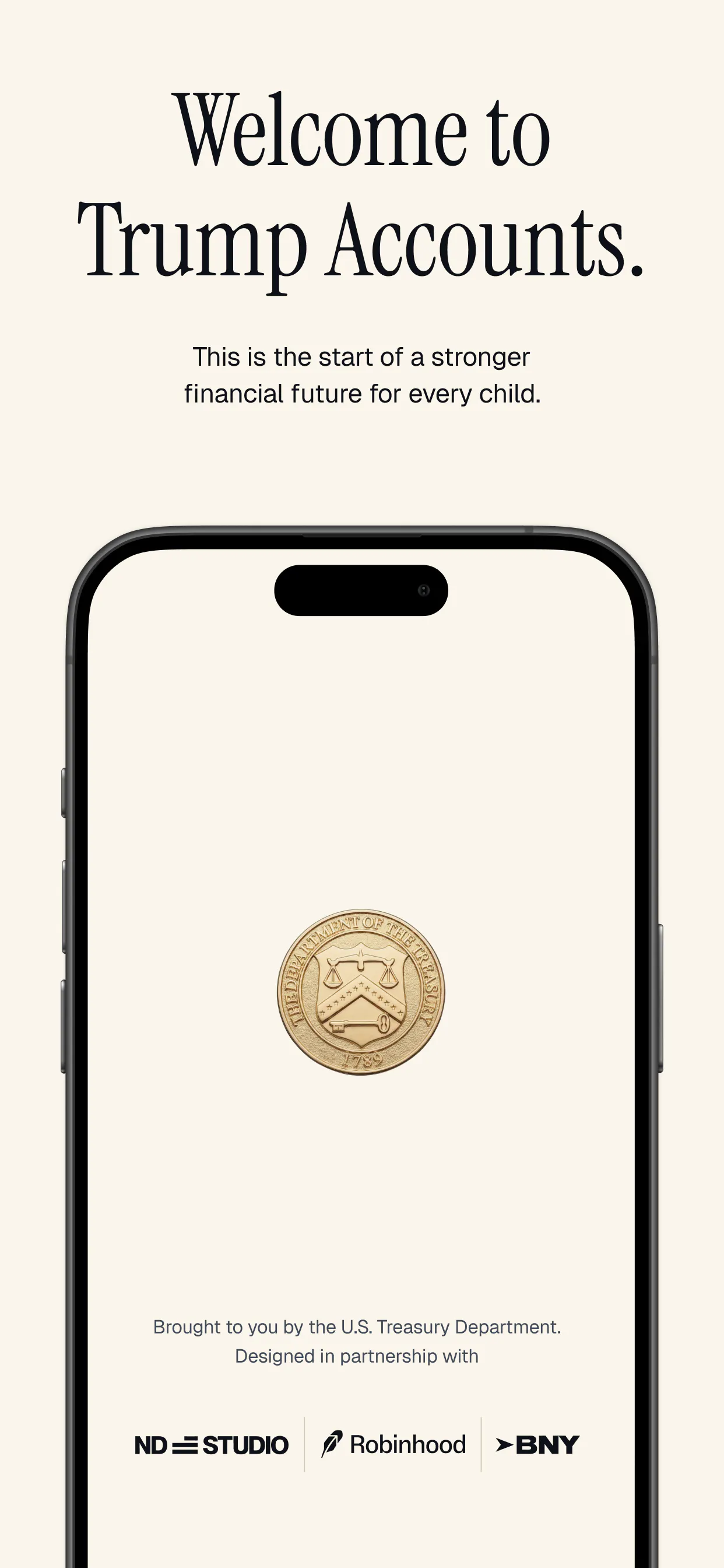
Trump Accounts help eligible American children begin building long-term financial growth from an early age. Eligible children born between 2025–2028 can qualify for an initial $1,000 U.S. Treasury contribution beginning July 4, 2026. The account features a pilot program contribution of $1,000 for children born between Jan. 1, 2025, and Dec. 31, 2028, and who are U.S. citizens with a valid Social Security number.
AI Analysis
Trump Accounts provide eligible U.S. children born 2025-2028 with a $1,000 initial U.S. Treasury contribution to build long-term financial security through investing. Core features include government-seeded accounts for early wealth accumulation, focused on kids, investing, and parenting. It solves parents' pain points of insufficient early savings and high future costs for education/living. Unique selling point is the automatic Treasury seed money starting July 4, 2026, for qualifying citizens with SSN, offering a valuable head start on compounded growth and financial independence.
The timing is favorable for 2025-2026 with emphasis on family support policies, rising awareness of early childhood investing, and economic pressures increasing demand for savings tools. It aligns with potential pro-family economic initiatives and technology maturity in fintech for account management. However, success hinges on policy approval and economic conditions. Rating: Excellent Timing.
Overall feasibility is Medium. Technical setup for accounts is straightforward using existing fintech infrastructure, but faces high compliance/regulatory risks due to government involvement, Treasury contributions, and eligibility verification. Development and operation costs could be significant for scaling to millions; political risks affect rollout. Scalability is high post-launch but team fit depends on governmental execution. Rating: Medium.
Main target segments: American parents (ages 20-45) of children born 2025-2028, especially middle-income families interested in long-term investing; U.S.-wide geographic distribution. Estimated TAM for child investment/savings products exceeds $50B; SAM for government-eligible newborns ~3.5M births/year or 14M over period; SOM depends on adoption. Core pain points: inadequate savings for rising education/child-rearing costs. Willingness to pay: High for additional contributions or related advisory services.
Competition level: Medium. Direct competitors: 1. 529 College Savings Plans (savingforcollege.com), 2. Acorns Early (acorns.com/early), 3. Greenlight Invest (greenlight.com), 4. Vanguard UTMA/UGMA accounts (vanguard.com), 5. State Baby Bonds (e.g., Connecticut's program). Advantages: Unique $1000 government seed, patriotic branding, simplicity for eligible births. Disadvantages: Restricted eligibility (specific birth years only), potential limits on withdrawals/use, less flexibility than private fintech solutions, and dependency on federal implementation vs. ongoing commercial innovation.
Upgrade Pro to unlock full AI analysis
Similar Products

Portfolio Lab
AI investing, done responsibly
▲ 271 votes

Yomi
A little cat who loves being read to
▲ 134 votes

Metal
AI-driven operating system for raising venture rounds
▲ 124 votes

Orus
Claude for investing in perpetuals
▲ 121 votes

Nina by Antalpha
Non-custodial AI Agent: research, predict & trade crypto
▲ 100 votes
Robinhood Agentic Trading
Let your agent trade
▲ 0 votes