
v0 Design Systems 2.0
Build with your components, colors, fonts, and patterns
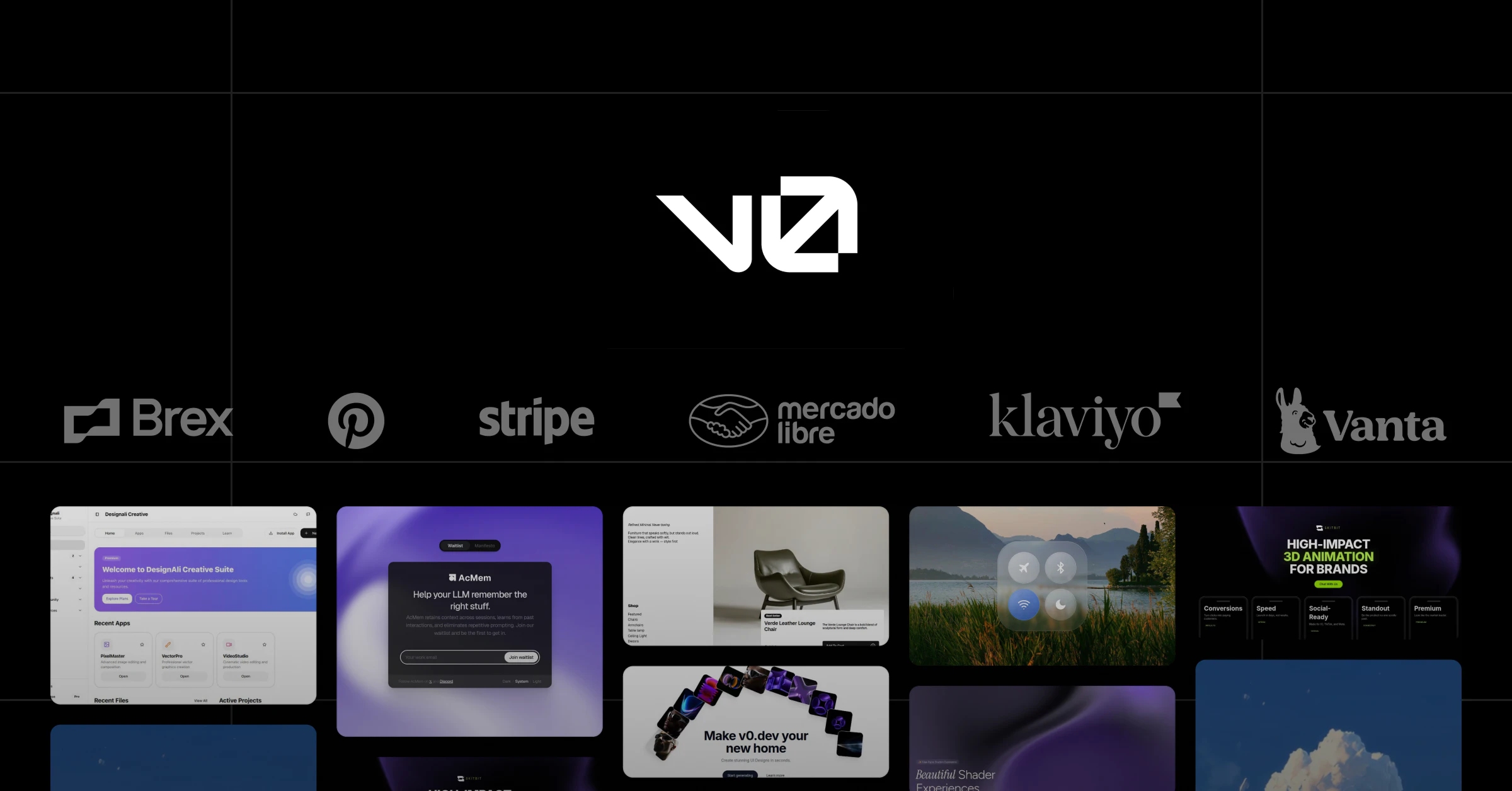
v0 Design Systems 2.0 is here. You can now import your system from the sources your team already uses: GitHub repos, public and private npm packages, Storybook and docs, Figma frames, screenshots, ZIPs, and real apps. v0 learns how your design system is actually used and creates a playground with your components and tokens. Preview the result, keep iterating in chat, and save it when it's ready.
AI Analysis
v0 Design Systems 2.0 allows importing design systems from GitHub repos, npm packages, Storybook, Figma frames, screenshots, ZIPs, and live apps. The AI learns actual usage patterns to build a tailored playground with your components, colors, fonts, and tokens. Users preview outputs, iterate through chat, and save refined versions. It addresses key pain points like design-code inconsistency, manual component integration with AI tools, and time lost adapting generic generators to brand standards. USP is its ability to ingest real-world sources and replicate proprietary systems accurately. Value proposition: Accelerates consistent, on-brand UI development for teams already invested in custom design systems.
2025-2026 sees explosive growth in AI-assisted coding and design-to-code tools, with maturing LLMs capable of nuanced system understanding. Demand for consistency in AI-generated UIs is rising as enterprises scale custom design systems. Economic push for developer productivity tools is strong. Excellent Timing.
Technical difficulty is high (parsing diverse inputs like code, Figma, images and training AI on proprietary systems), with significant AI inference costs. However, Vercel's existing infrastructure mitigates scalability and operation risks. Low regulatory hurdles. Strong scalability potential once models are tuned. Overall rating: High, supported by proven execution from the v0 team.
Primary users: Frontend engineers, design system maintainers, and product teams in tech/SaaS companies (ages 25-45). Industries: Software development, digital agencies, enterprise IT. Geography: Global, concentrated in US, Europe, Asia tech hubs. TAM for AI dev tools exceeds $5B with SAM for design-to-code ~$1B; SOM for this niche ~$200M. Core pains: Inconsistent AI outputs vs brand specs, slow onboarding of custom components. High willingness to pay for team plans that save engineering hours.
Competition Level: Medium. Direct competitors: 1. Galileo AI (galileo.ai), 2. Locofy.ai (locofy.ai), 3. Uizard (uizard.io), 4. Builder.io, 5. Figma AI/Dev Mode. Advantages: Uniquely ingests GitHub, npm, Storybook and real apps; learns usage context rather than just visuals; seamless chat iteration. Disadvantages: Tied to Vercel ecosystem, potentially higher compute costs. Stronger differentiation in code-first design system replication compared to design-centric competitors.
Upgrade Pro to unlock full AI analysis
Similar Products

Cohere Parse 5
Turn complex docs, tables & images into AI-ready data
▲ 158 votes

Opaline
PostHog for team Claude Code and Codex sessions.
▲ 141 votes

Adapt
The company brain that gets work done
▲ 124 votes

Tapfree for Chrome
Voice dictation that adapts to what’s on your screen
▲ 122 votes

Replay QA Security Scan
Automated Penetration Testing for AI-Built Apps
▲ 102 votes

Refoid
Automate App Store refund responses and track every outcome
▲ 68 votes